


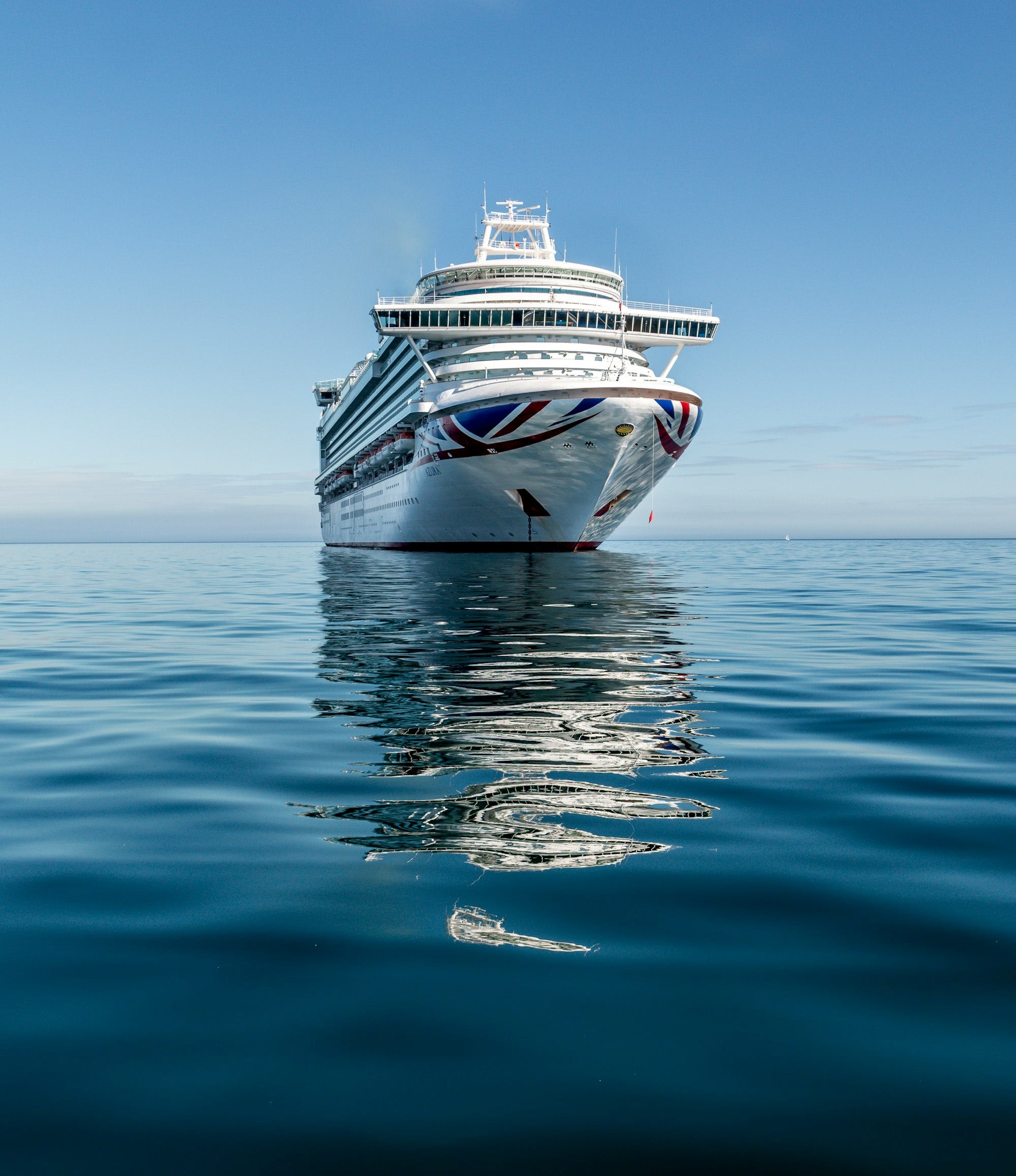
A suspected outbreak of hantavirus has killed three people on the Dutch polar cruise ship MV Hondius, including a Dutch couple, in what the World Health Organization (WHO) describes as a serious medical situation requiring an internationally coordinated response. The ship is currently anchored off the coast of Praia, the capital of Cape Verde, while authorities try to figure out exactly what has happened on board.
The Dutch government has agreed to lead the repatriation of two seriously ill crew members and one of the deceased passengers to the Netherlands.
Rentals in the Netherlands

Signaal tracks the Dutch rental market and notifies you the moment something matches your search. Be first to apply.
What happened on board
The MV Hondius left the southern Argentinian port of Ushuaia on 20 March for a 46-day expedition cruise. The ship is owned by Dutch shipping company Oceanwide Expeditions, which specialises in trips to the Arctic and Antarctic, and was sailing back to Cape Verde via stops including Antarctica and the British overseas territory of Saint Helena.
According to the WHO, six people on board became seriously ill. Three have since died. The first to fall ill was a 70-year-old Dutch man, who died on the ship; his body was taken ashore on Saint Helena. His 69-year-old wife was flown to South Africa, where she collapsed at a Johannesburg airport while trying to fly home and later died in hospital. A third passenger, a 69-year-old British man, is in intensive care in Johannesburg, where the hantavirus has been laboratory-confirmed.
A spokesperson for the Dutch Ministry of Foreign Affairs has confirmed that two of the dead are Dutch nationals. There were at least ten Dutch citizens on board.
Two crew members on the ship are also seriously ill and, according to Oceanwide Expeditions, "urgently require medical care." A fourth passenger has died, but it is not yet confirmed whether that death was linked to hantavirus.
The ship cannot fully dock
Cape Verdean authorities have not yet given permission for sick passengers or crew to disembark. Local health officials have boarded the ship to assess the two ill crew members, but evacuation to shore has not been allowed. Passengers have been asked to remain in their cabins as much as possible and to avoid contact with others.
In a statement, Oceanwide Expeditions said it is in close contact with affected passengers and their families and is working with local and international authorities, including the WHO, the Dutch public health institute RIVM, embassies, and the Dutch Ministry of Foreign Affairs.
The Dutch government's role
The Dutch government has confirmed it will lead a joint effort to repatriate the two seriously ill crew members from Cape Verde back to the Netherlands. The body of one of the deceased passengers, along with a relative who has so far shown no symptoms, will also be flown back to the Netherlands.
The repatriation depends on several factors, including authorisation from Cape Verdean officials. The Ministry of Foreign Affairs is providing consular assistance to families and friends of the Dutch passengers. The RIVM, the Dutch public health institute, is also involved, given the unusual nature of the outbreak.
What is hantavirus?
Hantavirus is a family of viruses that are usually carried by rodents such as mice and rats. People can become infected by inhaling dried particles of rodent urine, droppings, or saliva, or, less commonly, through a bite. Symptoms include high fever, severe respiratory problems, kidney and liver complications, and in some cases bleeding. The illness can be fatal.
The virus is rare and usually does not pass from person to person. There is one important exception: a South American variant called the Andes virus, which has been linked to limited human-to-human transmission and is found mainly in Chile and Argentina, where the Hondius began its journey. So far, only one case on board, that of the British man in Johannesburg, has been laboratory-confirmed as hantavirus. The WHO suspects, but has not yet confirmed, that the same virus is behind the other illnesses.
The virus came to wider public attention last year, when American actor Gene Hackman and his wife Betsy Arakawa died after she contracted hantavirus in the United States.
Was it really an outbreak on the ship?
According to Marco Goeijenbier, an intensive care doctor at Spaarne Gasthuis in Haarlem and Erasmus MC in Rotterdam, this does not necessarily look like a classic cruise ship outbreak, where passengers infect each other through the air, as happens with norovirus or flu.
The incubation period for the Andes virus is roughly 10 to 14 days, meaning passengers and crew could in theory have been infected at one of the stops on land before becoming ill on board. "If they have been on land from the boat, they could have been infected there and then become ill on board," Goeijenbier said.
The investigation is now focused both on the ship itself, including any possible contamination by rodents, and on the locations where the Hondius docked during its journey.
A coordinated international response
The WHO says it is "facilitating coordination between Member States and the ship's operators" both for the medical evacuation of sick people on board and for a broader public health risk assessment for the rest of the passengers and crew.
For now, the Hondius and around 240 people on board, around 170 passengers and 71 crew including one doctor, remain anchored off Praia, awaiting the outcome of negotiations between the Dutch government, Cape Verdean authorities, and the WHO. Whether the outbreak began on land or on board, what role rodents on the ship may have played, and whether human-to-human transmission has occurred at all, are all questions still to be answered.