
Utrecht Housing Corporations and GGD Sign Agreement to Tackle Mold in Social Rental Homes
Five housing corporations, tenant organisations and the regional public health authority in Utrecht have formalised their cooperation on mold prevention and treatment.

Five Utrecht housing corporations, tenant organisations and the regional GGD (the public health authority for the Utrecht region) have signed a formal agreement to tackle mold in social rental housing. The agreement was presented this week to alderman Dennis de Vries, who holds the housing and public health portfolios in Utrecht.
Rentals in the Netherlands
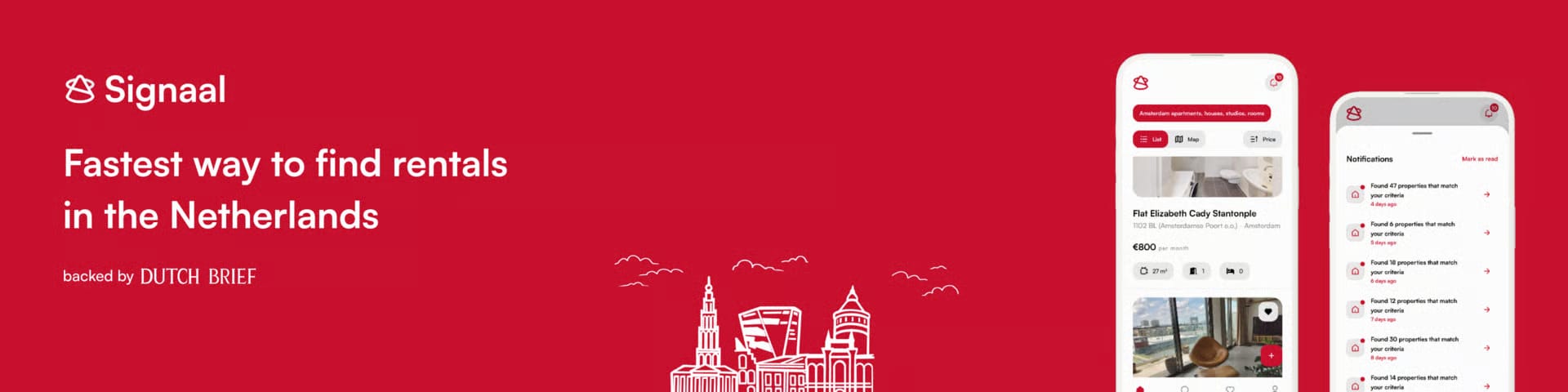
Signaal tracks the Dutch rental market and notifies you the moment something matches your search. Be first to apply.
Why mold is a significant problem
Mold is the most commonly reported complaint among tenants in the Netherlands. Research shows that 29 percent of social housing tenants and 31 percent of private rental tenants report experiencing mold in their home, up from 24 and 23 percent respectively in 2021. The problem is getting worse, not better.
The human impact is significant. RTL Nieuws previously reported that 15 percent of social tenants with mold problems are ashamed of the state of their home, with some no longer willing to receive visitors. Tenants also report health concerns, including parents worried their children will fall ill from the damp conditions.
Housing corporations frequently place the responsibility for mold with tenants, pointing to inadequate ventilation, without first investigating the underlying structural causes. The Utrecht agreement shifts this dynamic by requiring corporations to respond quickly and bring in expertise when advice alone does not resolve the problem.
What the agreement contains
One of the central commitments is a response time guarantee. Under the new agreement, tenants who report mold will be contacted by their housing corporation within one week. They will then immediately receive advice on removing and preventing mold. According to the parties involved, a pilot showed this advice was sufficient to resolve the problem for two-thirds of tenants.
For more serious cases, a mold specialist can visit the home to assess the situation and initiate any necessary maintenance work on the spot.
Amsterdam's approach and national picture
The Utrecht agreement follows a pattern already seen in Amsterdam. Since late 2023, the six largest Amsterdam corporations have been working together in a multi-year joint approach to mold and damp, alongside the municipality, tenant organisations, the GGD and housing advice organisation Stichting !WOON. Together they have processed more than 15,000 mold reports. Last month, Amsterdam separately requested support from the national government to help address the scale of the problem.
Despite these initiatives, the gap between cities with formal approaches and those without remains wide. The vast majority of Dutch municipalities, housing corporations and tenant organisations still have no formal agreements specifically on the approach to mold and damp.


